
Green Claims Compliance 2026: Why Enforcement Risk Is Higher, Not Lower

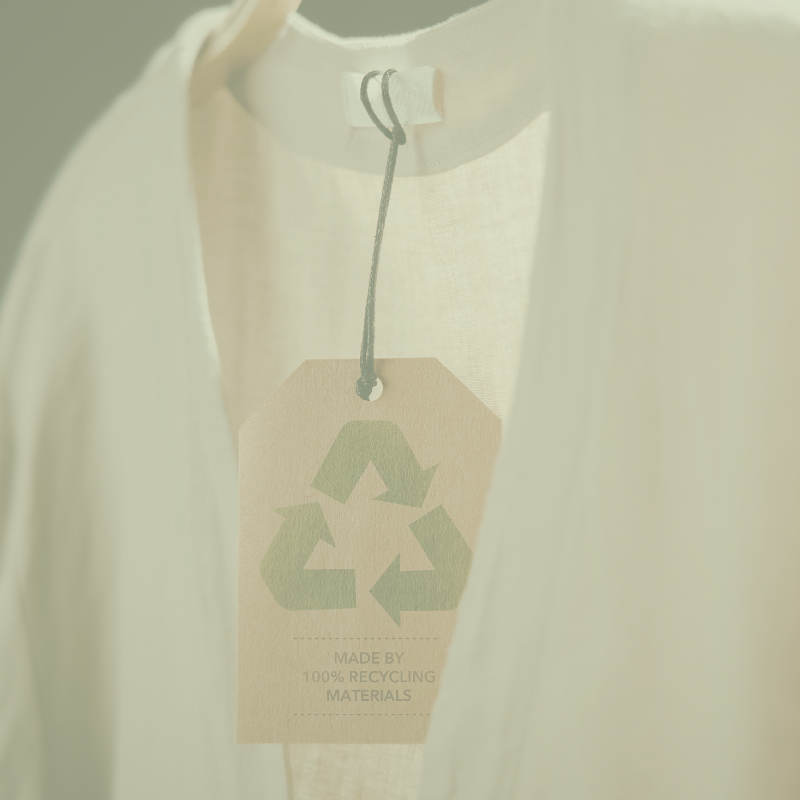
Many businesses exhaled when the EU scrapped its Green Claims Directive in June 2025. One fewer directive to plan around. One fewer compliance deadline to stress about. But if you're making environmental claims — on products, in marketing, on your website — that relief was premature.
Green claims compliance in 2026 is more demanding, not less. The EU's Empowering Consumers for the Green Transition Directive (ECGT) comes into full enforcement on 27 September 2026, banning whole categories of environmental claim outright. In the UK, the Competition and Markets Authority (CMA) now has direct fining power under the Digital Markets, Competition and Consumers Act 2024 (DMCC Act), and issued new supply chain guidance in January 2026 that extends liability significantly further than before.
The businesses most at risk right now are the ones that thought the story was over when the directive was withdrawn. It wasn't.
The Green Claims Directive: What Was It, and Why Was It Withdrawn?
In March 2023, the European Commission proposed the Green Claims Directive. Its purpose was to create a unified, EU-wide framework for substantiating environmental claims. Under the proposal, businesses would have needed independent, third-party verification before using terms like 'sustainable,' 'eco-friendly,' or 'carbon neutral' on products sold in the EU — a process called 'ex-ante' verification.
The directive proved too contentious. Critics argued it was too bureaucratic, too costly for smaller businesses, and too slow. On 20 June 2025, the European Commission announced its intention to withdraw the proposal, following the collapse of trilogue negotiations and pressure from the European People's Party, which argued the ex-ante verification requirement was too burdensome. Italy withdrew its support, trilogue talks were cancelled, and the directive died in committee.
What the Withdrawal Actually Means
The Green Claims Directive was the framework that would have told businesses exactly what evidence they needed and how to get it verified. Its withdrawal didn't remove the requirement to substantiate claims — it removed the clarity.
What's left is the ECGT: a directive already in force, with an enforcement date of 27 September 2026, and a set of broad prohibitions that businesses selling into EU markets must now navigate without the detailed substantiation rulebook the withdrawn directive would have provided. Member states are also enforcing national-level rules in the meantime, creating inconsistent standards across different markets.
The net result: less clarity, same enforcement pressure, and a shorter runway to get compliant.
The ECGT — Green Claims Compliance 2026 in the EU
The Empowering Consumers for the Green Transition Directive entered into force in March 2024. EU member states were required to transpose it into national law by 27 March 2026. From 27 September 2026, it is directly enforceable across the EU.
This is the regulation that matters now for businesses making environmental claims in EU markets.
What the ECGT Bans Outright
The ECGT adds specific prohibited practices to the EU's existing Unfair Commercial Practices Directive. Several categories of claim are banned entirely, not simply restricted or subject to extra scrutiny, but prohibited. These include:
Generic environmental claims without substantiation. Terms like 'eco-friendly,' 'green,' 'sustainable,' 'responsible,' or 'natural' — used without evidence tied to a recognised certification or verifiable measurement — will be prohibited. The claim needs to be specific, not aspirational.
Offset-based 'climate neutral' product claims. Claiming a product is 'climate neutral,' 'carbon neutral,' 'CO2 neutral,' or 'climate positive' where that claim relies on purchasing carbon offsets rather than actual reductions in the product's value chain will be banned outright. This is one of the most significant changes for businesses whose sustainability narrative is built around offset programmes.
Sustainability labels without independent certification. Labels or symbols suggesting environmental performance that aren't grounded in a recognised, independent certification scheme will no longer be permitted in EU markets.
Unsubstantiated future environmental claims. Stating that a product or company 'will be carbon neutral by [date]' without a credible, published, verifiable plan will be prohibited.
What the ECGT Doesn't Ban
Specific, substantiated, evidenced claims are still permitted, provided the evidence is accurate and documented. 'This product is made from 80% post-consumer recycled materials' is a defensible claim if you have the data. 'Our packaging has reduced CO2 by 35% since 2019, verified against ISO 14064' is workable.
The directive targets vague language used to imply sustainability without evidence. It is not designed to prevent honest, specific environmental communication. The test is simple: can you show your workings?
Penalties Under the ECGT
Enforcement is at national level, with fines set by individual member states. The EU framework requires penalties to be effective, proportionate, and dissuasive, with fines of up to 4% of annual turnover generated in the relevant EU market referenced as a benchmark. Businesses found non-compliant may also be required to take corrective action within 30 days and face public enforcement action, which carries its own reputational weight.
The UK Picture: CMA Enforcement Has Arrived
The UK left the EU before the ECGT became law, so it doesn't directly apply to UK-only sales. But two significant developments in 2025 and 2026 mean the UK enforcement picture has changed substantially, and UK businesses are not shielded from increased scrutiny.
Direct Fining Power Under the DMCC Act
The Digital Markets, Competition and Consumers Act 2024 came into effect in stages, with the consumer protection provisions live from April 2025. The most significant change for green claims: the CMA can now directly fine companies for breaches of consumer protection law, including misleading environmental claims, without going through the courts first.
The maximum fine is 10% of a company's global annual turnover, including the turnover of parent companies and subsidiaries. This is a material shift. Greenwashing enforcement is no longer primarily a reputational or court-based risk; it is now a regulatory risk that can produce a direct financial penalty.
The CMA has identified green claims as an explicit enforcement priority. Investigations that would previously have taken years to resolve can now move considerably faster.
Supply Chain Liability: The January 2026 Guidance
In January 2026, the CMA published updated guidance on green claims made across supply chains. The core message: businesses are responsible for the environmental claims they repeat or rely on from their suppliers — not just claims they originate themselves.
If you repeat a supplier's sustainability claim, on a product label, in marketing copy, or in a company report, you bear responsibility for taking reasonable steps to verify it. What 'reasonable' means will depend on the significance of the claim, your business's resources, and what evidence is available. Repeating a claim because a supplier told you it was accurate is not sufficient.
For SMEs, the practical implication is this: if you describe a product as sustainable because your supplier says it is, and that supplier's claim turns out to be unsubstantiated, you could face enforcement action. The guidance is live and applies now.
Does This Apply to UK SMEs If You Don't Sell Into the EU?
If your business only operates in the UK market, the ECGT doesn't directly apply. But the UK's own Green Claims Code and the CMA's new fining powers still do, and they cover much of the same ground.
The CMA's Green Claims Code requires businesses to make claims that are truthful, accurate, clear, and substantiated. The code applies to all consumer-facing communications, including websites, product packaging, social media, and advertising. The DMCC Act's consumer protection provisions, now in force, mean the CMA can act on breaches of this code with direct financial penalties.
If you sell into any EU market — even a small percentage of your business — the ECGT will apply to the claims you make in that market from 27 September 2026.
The practical reality: whether you're operating under UK or EU frameworks, the direction of travel is identical. Vague, unsubstantiated environmental claims are becoming legally indefensible in both jurisdictions.
Green Claims Compliance 2026: What to Do Before September
The September 2026 enforcement deadline is months away. CMA enforcement under existing powers is already live. Here is what preparation looks like in practice.
Audit Every Environmental Claim You Make
Start with a full inventory of claims: website copy, product labels, packaging, marketing materials, social media bios, company reports, email signatures, pitch decks. List every statement with an environmental dimension. For each one, ask: what evidence underpins this? Where is that evidence documented? When was it last checked?
This is the foundation. Without it, you cannot assess your actual exposure.
Cut Generic Language
'Eco-friendly.' 'Sustainable.' 'Green.' 'Natural.' 'Kind to the planet.' These are claims that will be prohibited in EU markets from September 2026, and they are already difficult to defend in the UK under the existing Green Claims Code.
Replace them with specific, substantiated statements. 'Made from 75% post-consumer recycled content' is a claim. 'Eco-friendly packaging' is not. The more specific you are, the more defensible you are.
Stop Using Offsets to Justify Neutrality Claims
If your marketing uses 'carbon neutral,' 'climate neutral,' or 'net zero' for a specific product, and that claim is underpinned by purchasing carbon offsets rather than actual emission reductions, remove or restructure it before September 2026 for EU-facing communications, and review it for UK-facing communications against CMA guidance.
You can still communicate about offsetting activity. You cannot use it to make product-level neutrality claims under the ECGT. The distinction matters and it is specific.
Verify Supplier Claims Before Repeating Them
Under the CMA's January 2026 guidance, you are accountable for supplier environmental claims you repeat. Review your product descriptions, marketing, and procurement communications. Where are you relying on a supplier's sustainability data? Have you seen the evidence? Is it documented?
This is particularly relevant in retail, food and drink, construction, and manufacturing — any sector where environmental claims about materials or sourcing are common.
Document Everything
For every claim you keep, document the supporting evidence: what it is, where it came from, and when it was last reviewed. If you face an investigation, this documentation is your primary defence. It also signals to regulators — and customers — that your claims are not accidental.
FAQs
Does the EU regulation apply to UK businesses?
The ECGT applies to claims made in EU markets. If your business sells products or services into any EU member state, the ECGT applies to the environmental claims you make in that market from 27 September 2026. If you only trade in the UK, UK consumer law — including the CMA's Green Claims Code and the DMCC Act — applies instead. Many of the practical requirements are similar.
Can I still say my product is 'carbon neutral'?
In EU markets, not if that claim is based on purchasing carbon offsets rather than actual reductions in your product's value chain — from September 2026, the ECGT prohibits it. In the UK, offset-based neutrality claims are already a high-risk area under the CMA's Green Claims Code, and the regulator has consistently challenged them. Take legal advice before making claims of this type in either market.
What counts as a 'generic' environmental claim?
A claim is generic if it refers to environmental performance broadly without specifying what it covers, how it was measured, or what evidence supports it. 'Eco-friendly,' 'green,' 'sustainable,' 'environmentally responsible,' and 'kind to the planet' are all generic. A claim like 'uses 40% less water in production than our 2020 baseline, measured against ISO 14046' is specific and substantiated. The more concrete and verifiable, the safer.
Does this affect my company website?
Yes. The CMA's enforcement remit covers all consumer-facing commercial communications, including websites. The ECGT applies to claims made in the course of commercial practice, which includes web content. If your homepage describes your company as 'sustainable' or your products as 'eco-friendly' without evidence, those statements are now under regulatory scrutiny in both UK and EU contexts.
What if I already have a third-party sustainability certification?
Recognised certifications can support specific claims — but only within their scope. A carbon offset certification does not make a product 'climate neutral' under the ECGT. A recycled content certification supports a specific materials claim. Certifications need to be relevant to the claim being made, current, and not used in a way that implies broader performance than the certification actually covers.
When does the CMA's January 2026 supply chain guidance apply?
It applies now. The guidance was published in January 2026, and the CMA's direct fining powers under the DMCC Act have been live since April 2025. There is no transition period or grace period. If you are currently repeating supplier environmental claims without having done reasonable verification, you are already exposed under UK consumer law.
The Bottom Line
The withdrawal of the EU Green Claims Directive was never the relief it appeared to be. The regulations that remain — the ECGT in the EU and the CMA's upgraded enforcement powers in the UK — are more than sufficient to catch businesses making vague, unsubstantiated, or offset-dependent environmental claims.
The businesses that will face the most difficulty are the ones that have been making broad sustainability claims because it felt like the right thing to say — not because they had evidence to back them up. That gap between intention and evidence is exactly what regulators on both sides of the Channel are now specifically looking for.
My Green Comms helps SMEs cut through sustainability regulation and communicate with credibility. If you're unsure whether your current claims stand up to scrutiny, get in touch — we'll tell you what we think.
Disclaimer: This article is for informational purposes only and does not constitute legal advice. If you have concerns about your legal accountability for environmental claims, speak to a qualified solicitor.


Comments