
The CMA's New Supply Chain Green Claims Guidance: What UK SMEs Need to Know
- Lee Green
- Apr 27
- 10 min read


On 22 January 2026, the Competition and Markets Authority published new guidance on environmental claims across supply chains. If your business makes any kind of sustainability or environmental claim — on packaging, in marketing, on your website — this guidance directly affects you.
It's not a new law. It's clarification of how existing law applies. And that's exactly what makes it significant.
For years, many businesses have operated on the assumption that if a claim came from a supplier, a certification body, or a manufacturer, they could pass it on without being legally responsible for its accuracy. That assumption is no longer safe to hold.
The CMA's January 2026 guidance makes it explicit: if your business repeats, relies on, or passes on an environmental claim made by someone else in your supply chain, you may be treated as having made that claim yourself.
This is a fundamental shift in how greenwashing liability is understood in the UK. It's also the first time the CMA has addressed cross-sector supply chain responsibility since the original Green Claims Code was published in 2021.
What Just Changed — and Why It Matters
On 22 January 2026, the CMA published "Making green claims: Getting it right, across the supply chain." It's the first cross-sector guidance on supply chain responsibility since the original Green Claims Code in 2021.
It doesn't introduce new legislation. What it does is clarify something that businesses have been uncertain about for years: when a claim originates with a supplier but a brand or retailer repeats it, who is legally responsible if that claim turns out to be wrong?
The answer the CMA gives is unambiguous. Everyone who plays a meaningful role in making a claim land — including businesses that simply repeat or rely on a claim made upstream — may be treated as having made that claim. And if that claim is misleading, they may face enforcement consequences.
This matters because most UK businesses making environmental claims don't originate all of those claims themselves. They're drawing on supplier data, certification schemes, and third-party assurances. The January 2026 guidance says that's fine, but it doesn't absolve you of responsibility for checking whether those claims are accurate.
The January 2026 Guidance: A Plain-English Summary
The guidance applies to all businesses in a supply chain: raw material suppliers, manufacturers, brands, distributors, retailers, and online marketplaces. It is explicitly cross-sector. There's no industry carve-out that lets you argue it doesn't apply to you.
The core principle
A business may be treated as making an environmental claim not only by creating it, but also by:
Repeating it in your own marketing materials
Relying on it to support a broader environmental claim
Passing it on to customers or end consumers
The CMA has also made clear that what constitutes reasonable due diligence will vary depending on your role in the supply chain, the size of your business, your resources, and the significance of the claim being made. Proportionality matters, but it doesn't mean zero responsibility.
What 'proportionate due diligence' looks like
The guidance asks businesses to consider:
How significant is the environmental claim? A headline claim about being "carbon neutral" carries more weight than a passing reference to recyclable packaging.
What verification is realistically available to you?
What steps would a reasonable business in your position take?
For a large retailer, reasonable due diligence might mean supplier audits, third-party verification, and contractual warranties. For a small business, it might mean asking for the evidence behind a claim and documenting your review.
The key point is that "my supplier told me it was true" is no longer a complete answer.
You're Now Responsible for Your Supplier's Claims
This is the part of the January 2026 guidance that most businesses haven't fully processed yet.
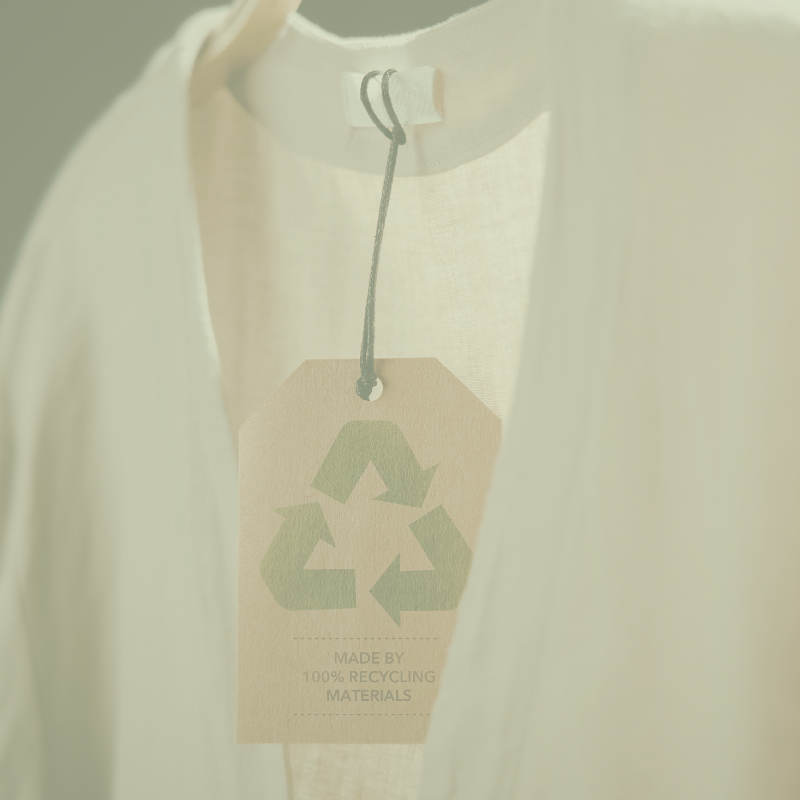
Consider a common scenario: a UK manufacturer tells a retailer that its product is made from "100% recycled materials." The retailer puts that claim on the product listing, in email marketing, and on social media. The claim turns out to be inaccurate; perhaps it refers only to packaging, not the product itself, or the figure includes a small percentage of non-recycled material.
Under the old working assumption, the retailer might argue: we got this from our supplier, it's their claim, not ours. Under the January 2026 guidance, that argument no longer holds. The CMA's position is that the retailer, by repeating and relying on the claim in its marketing, has made the claim. The question then becomes whether the retailer took reasonable steps to verify it.
The downstream effect for SMEs
This matters enormously for SMEs in particular, for two reasons.
First, SMEs are disproportionately reliant on supplier-provided information to substantiate environmental claims. Large businesses often have dedicated sustainability teams who can interrogate supply chain data. SMEs typically don't; they rely on what their suppliers tell them.
Second, SMEs often operate in the middle of longer supply chains, which means the claim may have passed through several hands before it reached them. They may not even know its original source.
The guidance acknowledges this and says that what's reasonable is context-dependent. But it doesn't let SMEs off the hook entirely. The expectation is that you take proportionate steps — not that you do nothing.
What this means for your marketing
If your marketing makes any of the following types of claim, you need to know where the evidence comes from:
Origin claims: "made from recycled materials", "sustainably sourced", "responsibly produced"
Impact claims: "reduces carbon emissions", "saves water", "biodegradable"
Certification references: "certified sustainable", "carbon neutral certified", "eco-friendly"
Net zero or offset claims: "carbon neutral", "net zero product", "climate positive"
For each of these, ask: where did this claim come from? What evidence exists? Has that evidence been independently verified? If you can't answer those questions, you have a problem; regardless of where the claim originated.
The Real Enforcement Risk
The January 2026 guidance lands in a fundamentally different enforcement environment than existed even 12 months ago.
The Digital Markets, Competition and Consumers Act 2024 (DMCCA) brought key consumer enforcement provisions into force in April 2025. Before this, if the CMA identified a consumer protection breach, it had to take businesses to court to impose penalties. That acted as a practical brake on enforcement; court proceedings are slow, resource-intensive, and uncertain.
The DMCCA removed that brake. The CMA can now decide independently that consumer protection law has been breached and impose penalties directly, without needing a court order.
What the fines look like
The maximum penalty under the DMCCA is 10% of global annual turnover, or £300,000 — whichever is greater. There are also additional daily penalties for continued non-compliance.
For most SMEs, 10% of global turnover is a business-threatening number. This isn't a fine that shows up in a footnote in a corporate annual report. It's the kind of penalty that ends businesses.
Who the CMA is likely to target
The guidance is clear that the CMA will focus enforcement on "the party best placed to remedy the issue." In practice, this often means the business closest to the consumer — the retailer, the brand, the online marketplace — rather than the upstream supplier who originated the claim.
The practical implication: if you're a brand or retailer, you can't rely on your supplier to solve this for you. You need to build your own verification processes.
Sectors under the spotlight
The CMA has indicated that fashion and beauty are early enforcement priorities, but the January 2026 guidance is explicitly cross-sector. Any business making environmental claims is in scope. Given the speed at which sustainability has become a standard marketing element across food, home goods, construction materials, financial services, and professional services, the universe of affected businesses is very large.
What SMEs Actually Need to Do
The good news is that the CMA's guidance is proportionate. It's not asking SMEs to replicate the compliance infrastructure of a multinational. It's asking you to do what a reasonable business in your position would do.
1. Audit your current claims
Start with a simple audit of every environmental claim your business makes — on your website, in sales materials, in proposals, on packaging, in social media. For each one, ask: where did this claim come from? Is it our own claim, or does it originate from a supplier or third party?
2. Trace every claim to its evidence
For every claim on your list, you need to be able to point to the evidence that supports it. A supplier saying "our material is 30% recycled" is not the same as independent verification. A certification doesn't automatically mean the claim is accurate — you need to understand what the certification covers.
3. Build due diligence into supplier relationships
Going forward, make verification a standard part of how you work with suppliers. At a minimum:
Ask suppliers for the underlying evidence when they make environmental claims
Document your review of that evidence
Include contractual obligations on suppliers to maintain and update claim accuracy
Build in a review trigger when product formulations, sourcing, or processes change
4. Fix vague and generic claims now
Generic environmental claims — "eco-friendly", "green", "sustainable", "good for the planet" — were already problematic under the 2021 Green Claims Code. They're even harder to defend now. "Made from 30% recycled plastic, verified by [certification body]" is defensible. "Made sustainably" is not.
5. Keep records
Documentation matters. If the CMA ever examines your claims, being able to show that you took reasonable steps — even if those steps weren't perfect — is far better than having no record at all. Keep a paper trail of supplier communications, evidence reviews, and internal decisions about claim accuracy.
6. Review at pace with your supply chain changes
Your supply chain isn't static. When you switch suppliers, launch new products, or update how you source materials, your claims need to be reviewed at the same time. Build claim review into your product launch and supplier change processes; not as an afterthought, but as a standard step.
September 2026: The Next Deadline You Need to Know About
The January 2026 CMA guidance is the most immediate priority for UK businesses. But there's a second deadline on the horizon: 27 September 2026.
That's the date from which the EU's Empowering Consumers for the Green Transition Directive (ECGT) takes effect across EU member states. While this is an EU directive, it matters to UK businesses for two reasons.
First, if you sell into the EU market, or work with suppliers or partners who do, EU rules apply to those transactions. The ECGT bans generic environmental claims that aren't backed by recognised excellent environmental performance. It also bans offset-based "climate neutral" product claims, so if any part of your supply chain is marketing a product as climate neutral based on carbon offsets, that claim becomes illegal in EU markets from September 2026.
Second, UK and EU enforcement tends to converge over time. The FCA, CMA, and other UK regulators consistently align with EU standards even post-Brexit. The direction of travel is the same: more specificity, more verification, more accountability.
The separately paused EU Green Claims Directive
The proposed EU Green Claims Directive, which would have required pre-approval of environmental claims, was effectively withdrawn by the European Commission in 2025 after negotiations stalled. It remains on hold.
This is sometimes misread as a relaxation of green claims rules in the EU. It isn't. The ECGT is already law and takes effect in September 2026. The withdrawal of the Green Claims Directive just means that an even stricter additional layer won't be added on top — for now.
Frequently Asked Questions
Does this guidance apply to B2B businesses, or only consumer-facing companies?
The January 2026 guidance applies to all supply chain actors, including B2B businesses. If you make environmental claims about your products or services — in sales proposals, on your website, or in contract documentation — the same principles apply.
We're a very small business. Does proportionality mean we can do less?
Proportionality means the CMA expects you to do what's reasonable given your size, resources, and role. A five-person business isn't expected to conduct the same due diligence as a major retailer. But proportionality doesn't mean zero due diligence.
What if our supplier gives us incorrect information and we relied on it in good faith?
Good faith reliance on supplier information is a mitigating factor, but it's not a complete defense. If you can show that you asked for evidence, reviewed it, and reasonably concluded the claim was accurate, that's a much stronger position than having no record of any review at all.
Our marketing refers to a third-party certification. Is that sufficient?
Certification references are acceptable if the claim is consistent with what the certification actually covers. A certification that applies to your manufacturing process does not automatically justify a claim about your finished product's environmental impact. Check what your certification covers and make sure your claims don't go beyond it.
We have a claim on our website we're now unsure about. Should we take it down immediately?
If you have genuine doubt about a claim's accuracy, removing it while you investigate is the prudent course. The reputational and legal risk of leaving an inaccurate claim live is higher than the risk of updating your website.
Is there a simple way to know if a claim is defensible?
Ask yourself: could I, right now, produce the evidence that proves this claim is accurate? If yes, you're in a reasonable position. If the answer is "not really," the claim shouldn't be live.
The Bottom Line
The CMA's January 2026 guidance doesn't introduce new legal obligations. It clarifies how existing law applies to a supply chain reality that most businesses have been navigating informally.
What it makes clear is this: the informal approach is no longer sufficient. Repeating a supplier's claim without verification, using generic sustainability language without evidence, or assuming that certification covers more than it does — all of these are now higher-risk behaviours than they were 12 months ago.
The enforcement environment has changed. The CMA has new powers, a clear cross-sector mandate, and an explicit intent to focus on businesses closest to the consumer. If your marketing includes environmental claims — and for most SMEs, it does — now is the time to get this right.
The businesses that will come through this period well aren't the ones with the biggest sustainability programmes. They're the ones with the clearest, most specific, best-evidenced claims. Clarity is the only real compliance strategy.
My Green Comms helps SMEs cut through sustainability regulation and communicate with credibility. If you're unsure whether your current claims stand up to scrutiny, get in touch — we'll tell you what we think.
This article is for informational purposes only and does not constitute legal advice. If you have concerns about your legal accountability for environmental claims, speak to a qualified solicitor.


Comments